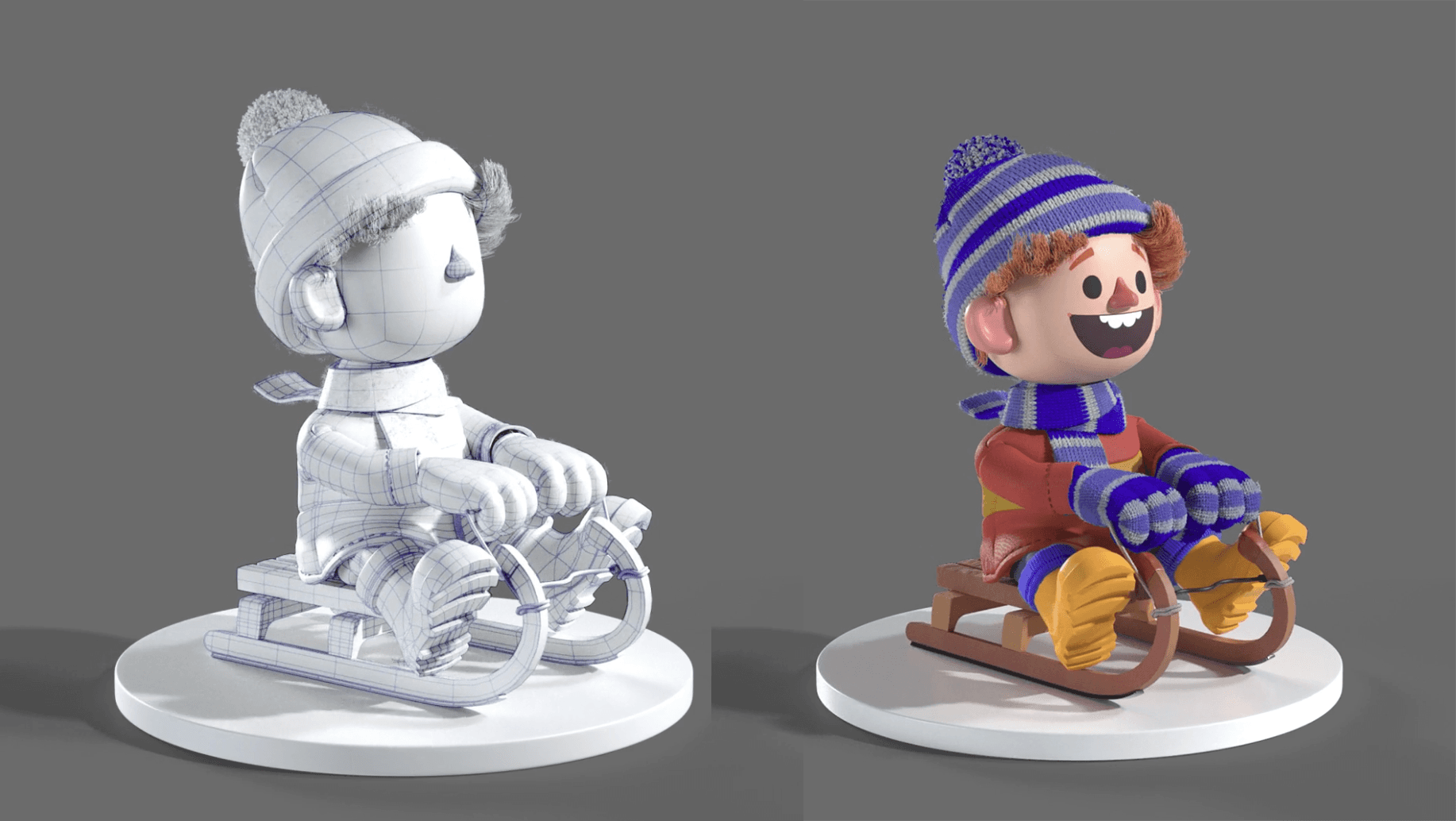
From Sketch to 3D: How a Brand Character Gets Built
Transforming a 2D sketched idea, into 3D characters, ready for action.
Lead Animator
Transforming a 2D sketched idea, into 3D characters, ready for action.
Lead Animator
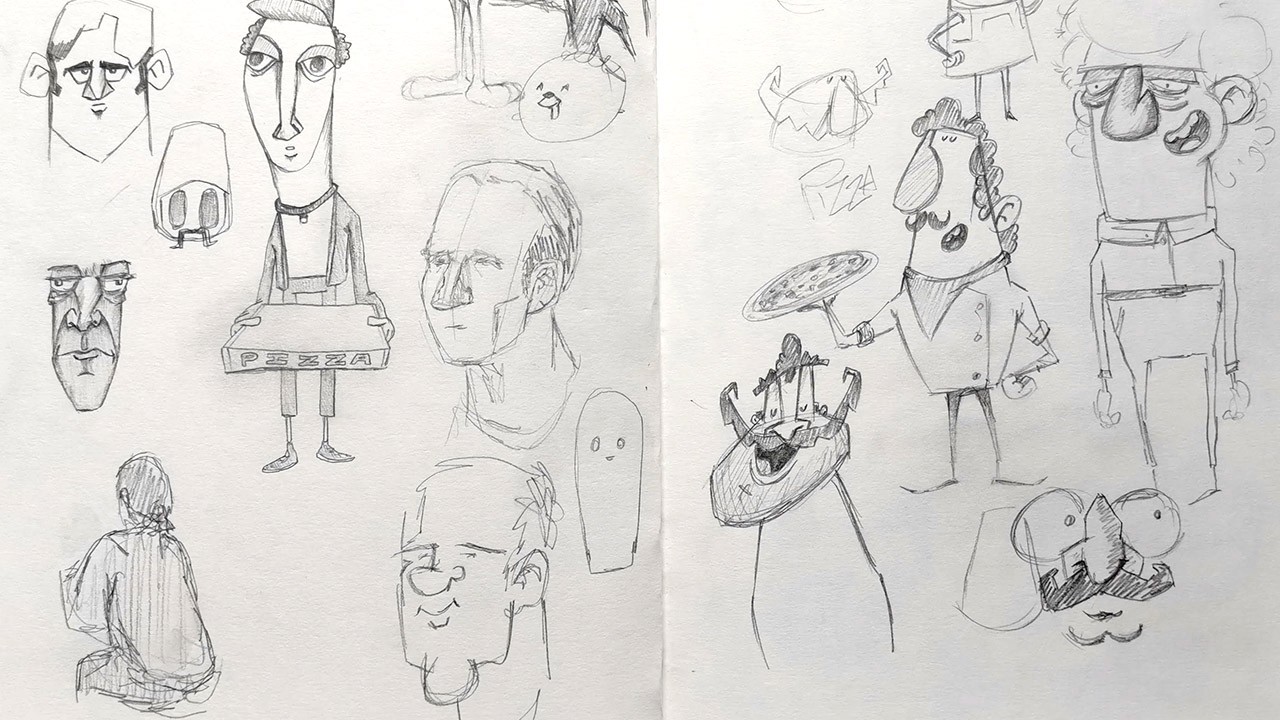
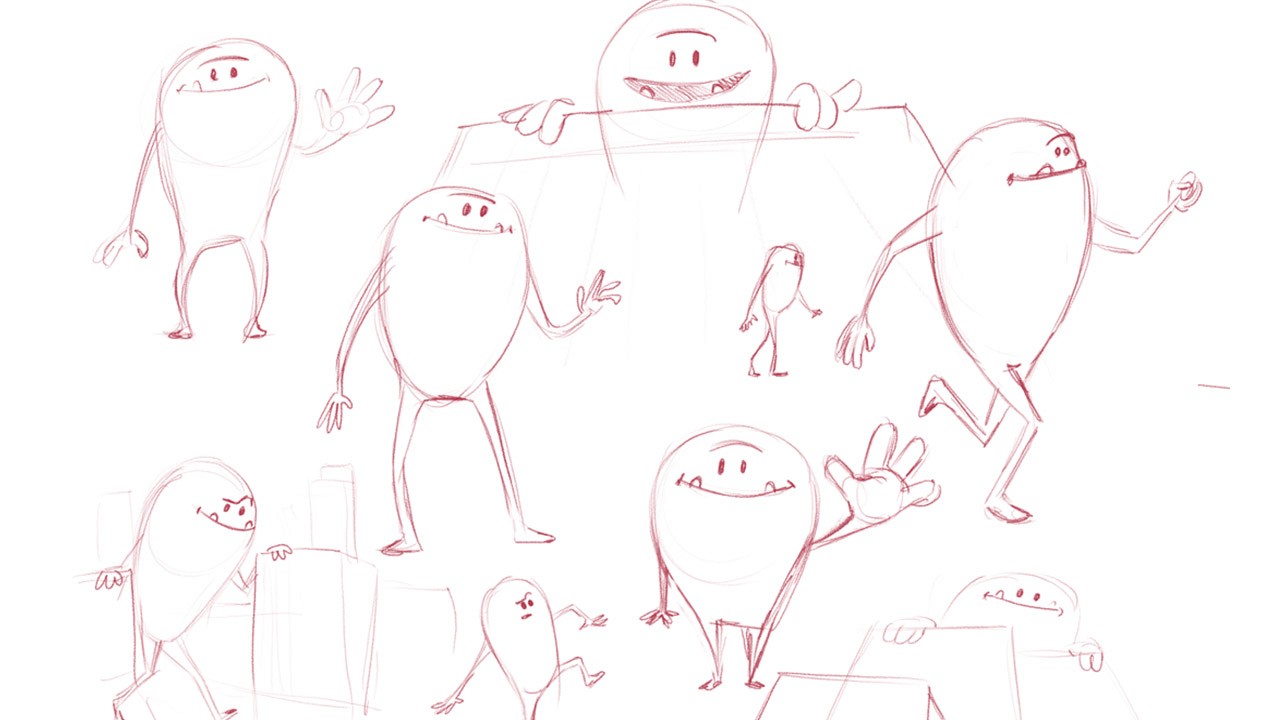
When a brand asks us for a character, there's usually a sketch on the table early: a doodle on a napkin, a drawing in the brand guidelines, or [increasingly] an AI render someone made over the weekend. Getting from that 2D idea to a 3D character that can actually perform in an ad, an explainer or a whole campaign is where most of the craft lies. It's also where most of the budget gets saved or wasted.
To show what that journey looks like, I ran it on our own characters: a family of giant monsters stomping around the Manchester skyline. No client, no deadline, just the full pipeline from sketch to model, rig, camera tracking and compositing. Here's what it taught me, and what it means if you're commissioning a character of your own
(There's more on this on our character animation page, including some case studies.)
Test the processI intended the characters to be thrown-away, just a practice exercise, so I didn’t spend too much time on them. Not my usual process, but I just wanted to get something made, test the process. Then if it was working, I could edit it or just rip it up and start again.After the modelling phase, I began to lose love for this rabble.
After stepping back a bit and after telling everyone that they were no good, I reflected on them, looked back at the original sketches and it was just a bit of charm had been lost in the modelling process. The cat’s eyes were completely wrong, and he didn’t have teeth yet. The beauty of working through these phases is the control we have to adjust, to craft the character. Once I’d amended those, it started to look good again.
The antler thing’s feet though were still a mess, so those need to be readdressed.Once I had three characters modelled, two weren’t quite working. The “fur” around the feet and hands of “Dunph” (it was easier to come up with stupid names whilst modelling, to keep the file nice and neat) wasn’t working, so I went in and completely remodelled those sections.
My first models of the monsters were technically fine and completely charmless. The cat character's eyes and teeth looked right from the front and wrong everywhere else. The fur around another character's hands and feet made him look stiff rather than soft and loveable.
So I went back and remodelled. That's normal, not a failure. A 2D drawing can cheat: it only has to work from one angle. A 3D character has to hold up from every camera position, in every expression, at every frame of animation. Much of the job is protecting the personality of the original sketch while making it work in three dimensions.
As an internal project for testing out techniques, it’s been a successful endeavour. Every small problem you encounter, leads you to a solution that may seem small in that moment, but when you add up all those little learnings, you have a wealth of expertise in no time.
You can only really get that level of knowledge through trying and failing. Learning how to fix things that break. Why did it break in the first place? Is there a way to approach the problem that removes the chance of it breaking?Generative AI is an incredible tool, and it’s here to stay, but how it’s used needs to be carefully thought through before it can integrate into a production pipeline. The speed it evolves also means that my worries and concerns will be laughable in three months time, but the more we remove the human element from the creative process, then something will be lacking in the end.
Will most people care? Probably not. The demand for human crafted characters will surely decline. It will become a niche market, and this isn’t just an old fogey shouting at clouds, I think we’ll see the arts being devalued even more than they are in society. People should be creating things just for the sake of it. It’s good for the soul, and let’s be honest… Most of it IS slop. 😃